 By
By When you start learning AI, the jargon is overwhelming.
Artificial Intelligence. Machine Learning. Deep Learning. Neural Networks. Transformers. Supervised. Unsupervised.
Let’s simplify everything — without skipping the important nuances.
1️⃣ The AI Hierarchy (The Big Picture)
Artificial Intelligence (AI) is the broad field of building systems that perform tasks humans are generally good at:
- Recognizing patterns
- Understanding speech
- Interpreting text
- Making decisions
- Seeing and identifying objects
Inside AI → Machine Learning (ML)
Inside ML → Statistical ML and Deep Learning
They are related — but not identical.
What’s AI but NOT ML?
AI includes systems that don’t “learn” from data.
Examples:
- Regular expressions (pattern matching)
- Rule-based systems
- Parts of robotics
You can build an AI-like system using rules alone.
Machine learning is just one powerful way to build AI.
2️⃣ What Is Machine Learning Really?
Machine learning is about learning patterns from data instead of hardcoding rules.
Traditional Programming
You give:
- Input
- Logic
You get:
- Output
Example:
y = x²
Machine Learning (Training Phase)
You give:
- Input
- Output
The system learns:
- The logic (model)
That learned logic is stored as a model.
Two Phases of ML
1. Training
Input + Output → Learn the equation
2. Inference
New Input → Predict Output
That’s the entire pipeline.
3️⃣ Classification vs Regression
These are the two most common supervised learning problems.
🟢 Classification (Categories)
Examples:
- Spam / Not Spam
- Cat / Dog
- Fraud / Not Fraud
- News: Business / Sports / Tech / Health
Two categories → Binary classification
More than two → Multiclass classification
Output = Discrete label
🔵 Regression (Numbers)
Example: Home price prediction.
Platforms like:
- Zillow
- Magicbricks
- 99acres
They estimate property prices using past data:
- Area
- Bedrooms
- Age
- Location
Output can be:
- 925K
- 921.45K
- 930K
Infinite possibilities → That’s regression.
4️⃣ Supervised vs Unsupervised Learning
Supervised Learning
You have labeled data.
Example:
Spam emails already tagged as spam or not spam.
This requires manual labeling effort.
Unsupervised Learning
No labels.
Toy Bucket Analogy
Imagine a child cleaning toys.
Supervised:
You say:
- Bucket 1 → Dolls
- Bucket 2 → Cars
- Bucket 3 → Trucks
Unsupervised:
You say:
“Just divide into two buckets.”
The child may group:
- By color
- By size
- By type
That’s unsupervised learning.
Real Use Cases
📁 Document Clustering
Automatically grouping:
- Legal documents
- Invoices
- Requirement docs
Algorithms:
- K-Means
- DBSCAN
- Hierarchical clustering
DBSCAN is also used for outlier detection.
5️⃣ Tools for Statistical ML
Core stack:
- Python
- NumPy
- Pandas
- Matplotlib
- Seaborn
- Jupyter Notebook
- Scikit-learn
- XGBoost
Best suited for:
- Structured data (rows and columns)
6️⃣ Why Deep Learning Exists
Statistical ML works well for structured data.
But what about:
- Images?
- Audio?
- Text?
- Video?
These are unstructured data.
Deep learning handles this complexity.
7️⃣ Neural Networks — Explained Intuitively
Imagine training students to detect a koala.
Each student has a specific role:
- One detects eyes
- One detects nose
- One detects ears
- One detects legs
- One detects tail
Each gives a score from 0 to 1.
Higher-level students combine these signals:
- Face detection
- Body detection
Finally, one student makes the decision.
That structure is a neural network.
- First layer → Detect small patterns
- Hidden layers → Detect higher-level features
- Final layer → Output decision
How Training Works (Backpropagation)
Initially:
Everyone guesses randomly.
Supervisor says:
“You’re wrong.”
Error is passed backward.
Each student adjusts their weight (importance).
Repeat this for thousands of images.
Over time:
Accuracy improves.
This is called backpropagation.
It uses:
- Derivatives
- Gradient descent
- Weight updates
8️⃣ Neural Network Architectures
Feedforward Neural Network

Information flows forward only:
Input → Hidden → Output
No loops.
Recurrent Neural Network (RNN)
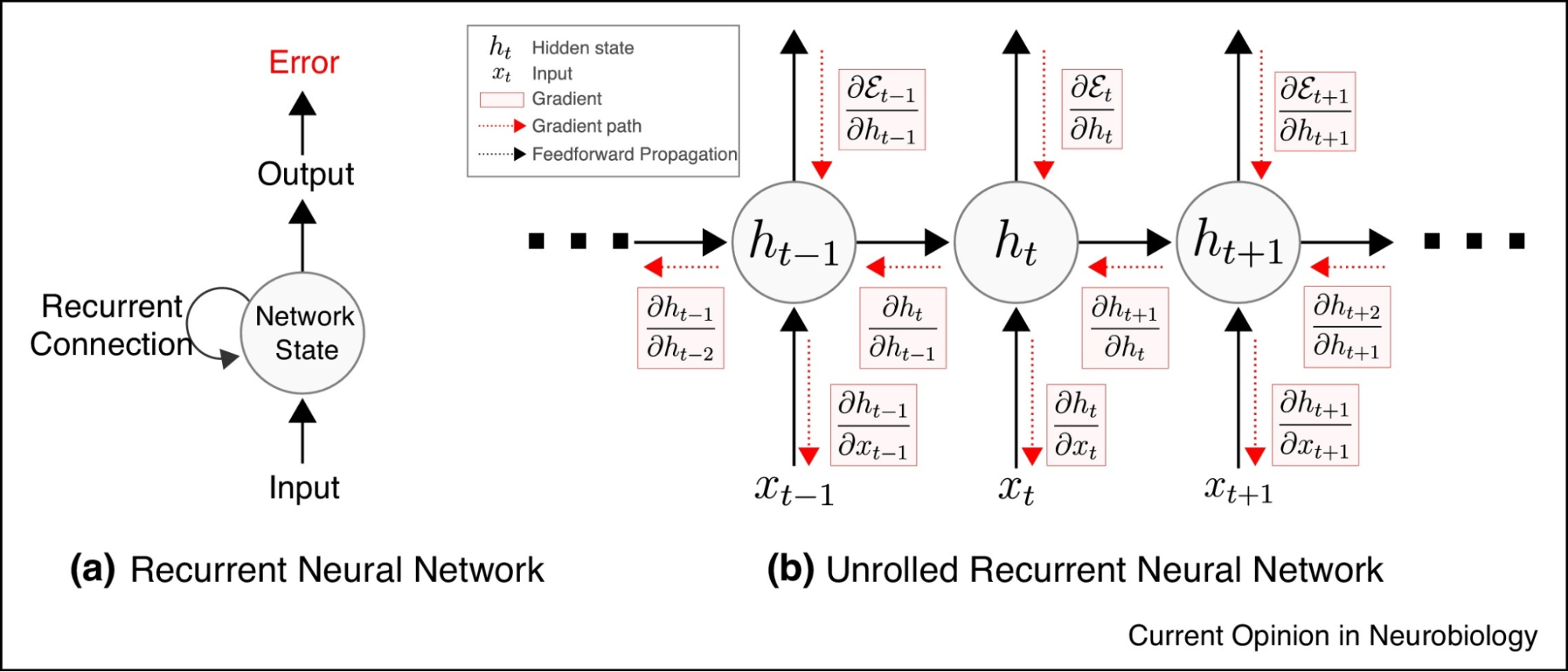
Used for sequences.
Output feeds back into the system.
Example use cases:
- Text generation
- Time series forecasting
- Speech recognition
Transformer Architecture
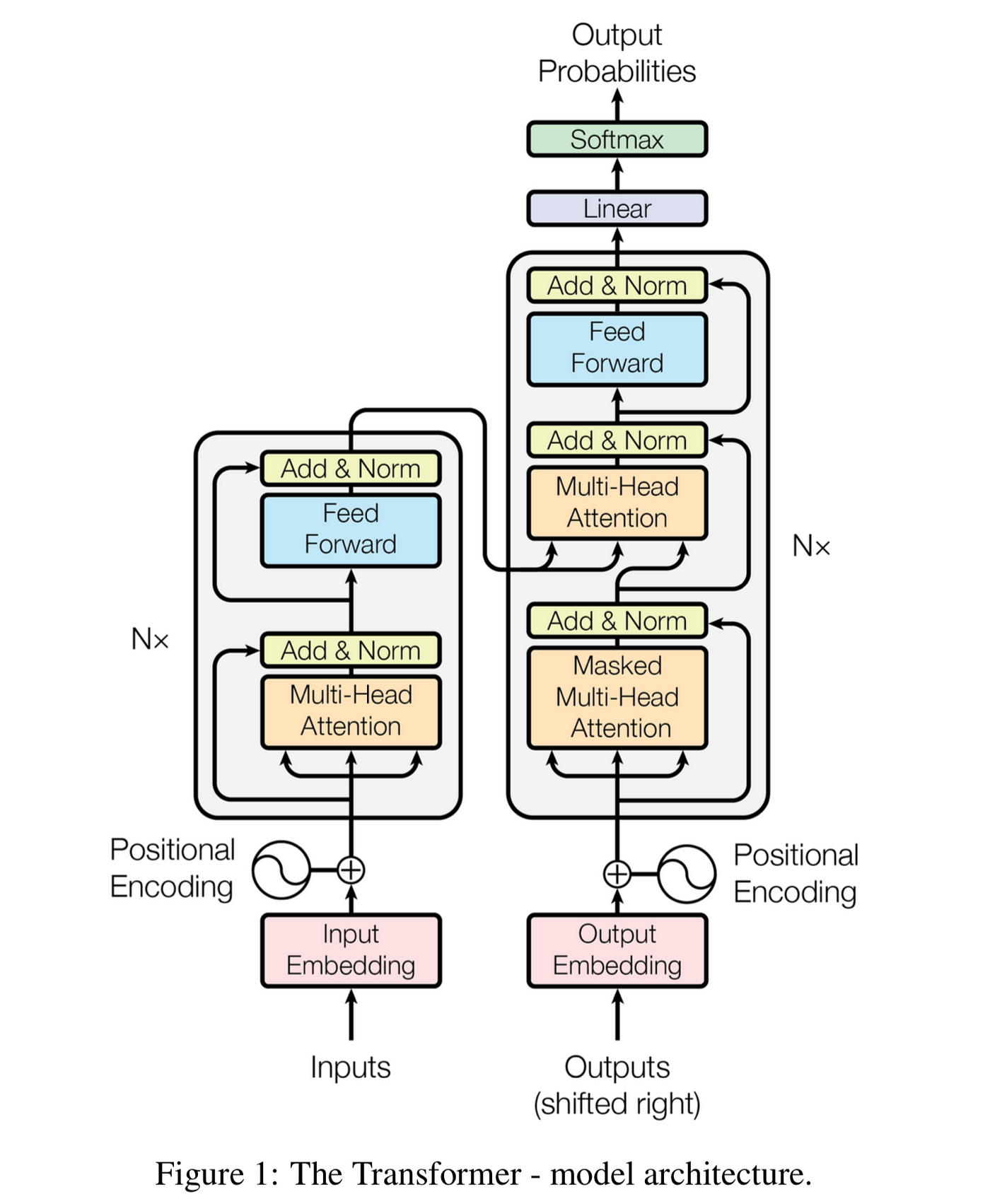
The foundation of modern generative AI.
Models like:
- ChatGPT
- GPT-4
GPT = Generative Pre-trained Transformer
Transformers allow:
- Parallel processing
- Context understanding
- Long-range dependency modeling
They power:
- Generative AI
- Agentic AI
9️⃣ Deep Learning vs Statistical ML
When choosing between them, evaluate:
1. Data Type
Structured → Statistical ML
Unstructured → Deep Learning
2. Data Volume
Small/Medium → ML works well
Massive datasets → Deep Learning performs better
3. Feature Complexity
Simple features → ML
Complex hierarchical patterns → DL
Deep learning can handle structured data too — but experimentation decides.
🔟 Deep Learning Tooling
Frameworks:
- PyTorch
- TensorFlow
PyTorch:
- More intuitive
- Beginner-friendly
- Popular today
TensorFlow:
- Fine control
- Strong production ecosystem
Hardware:
- GPUs (local or cloud)
- Essential for large-scale training
Final Summary
AI → The umbrella
ML → Learns patterns from data
Statistical ML → Structured data
Deep Learning → Neural networks for complex patterns
Supervised → Labeled data
Unsupervised → No labels
Classification → Categories
Regression → Numbers
Transformers → Power modern generative AI
This structured understanding prevents confusion later.
Most people memorize terms.
Few understand the hierarchy.
That difference compounds over time.